 By Danel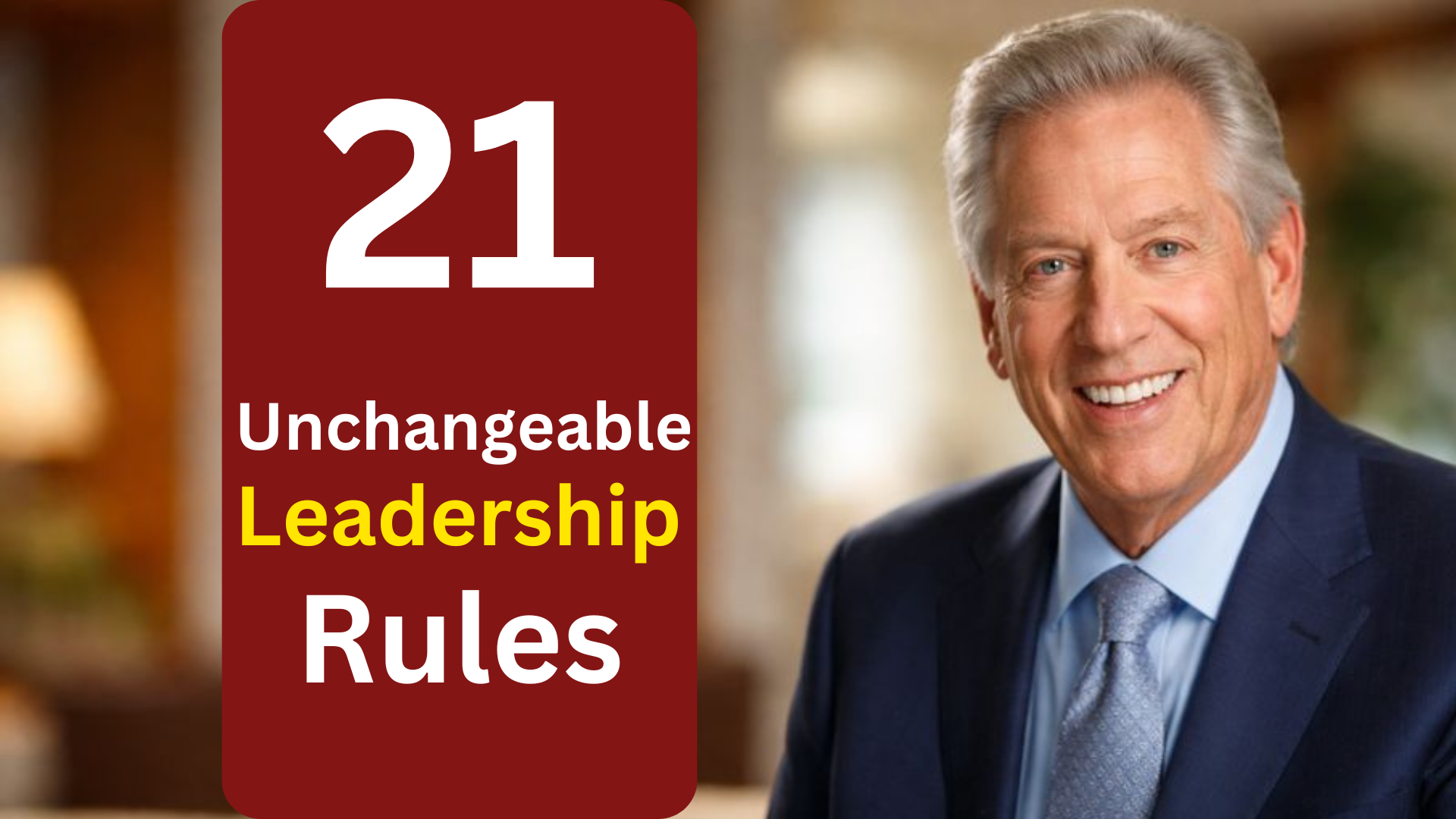
John Maxwell’s Book Summary
John Maxwell is one of the world’s foremost leaders in leadership. John has coached millions of people and has written over 50 books. Like all the other leaders, Yohannes agrees that leadership is about organizing, making people enjoy, to motivate and motivate. However, John E.A. in his 2007 book titled “21 rules of leadership that cannot be broken” John breaks down leadership.
Every episode of 21 Laws John has his own chapter in which he shares the personal stories and biographies of some of history’s greatest leaders. Watching every rule quickly is as follows
1. The law of betrayal. It shows that there is a limit or limit to our capacity that is determined by our leadership ability. When we develop our leadership skills, we automatically develop our ability to impact the world. If our leadership skills are frozen, so is our ability to make a big impact.
2. Law of influence. Influence is the force or capacity to bring about the desired result. Maxwell mentions this rule many times in his book. In a simple way, the true dimension of leadership is impact – nothing, nothing less. Influence is the one that helps the leader to realize his goals and dreams and without influence, a leader will lack the bullet to reach his destination.
3. Law of the process. Leaders are students and their ability to develop and improve their skills sets leaders apart from their followers. The learning process is continuous and the result of self discipline and perseverance. To quote Maxwell, “If I ever need motivation to move forward, I’m at an event. If I need improvement, then I will participate in the process and persevere. “Maxwell asks the questions “”What’s one small thing you can do more than that that would positively impact your life or business?” So is there anything you can stop doing that has some kind of impact? “Both are important when we strive to be a little better each day.”
4. The law of the survey. Anyone can sail a ship, but it takes a leader to chart the course by seeing where they want to go and outlining the most effective course to get there. This is true for individual leaders and leadership groups. To quote Maxwell, “If the leader can’t lead his people in rough waters, the ship must sink”
5. Law of Inclusion. The law of inclusion focuses on helping others not ourselves. Leadership is an act of service to others and a true leader focuses on creating assets to others. The best place to serve is where we can add value to others. Leaders add value to others by assuming others and comparing others to what they value. True leaders “how can i serve? “They will ask. It’s not so much of a “what’s there for me” because they’re service-focused.
6. Law of strong ground. The strong ground is a strong character, that lives with honesty, truthfulness and discipline. Trust is the foundation of leadership. Is it found or not. Character is the source of confidence. We build our character by being honest even when it hurts. To be honest, we must pretend to be something we are not and be with everyone. Rejection comes from doing what needs to be done whether you like it or not.
7. The law of respect. If we want people to respect us, have high esteem for us, and are willing to follow our lead, we must be strong and worthy of respect, because people are created to follow character that is stronger than their leadership skills and character. It is not by chance to choose who you want to follow. People will follow people with leadership qualities they respect and admire and think they deserve more respect than themselves.
8. The law of meditation. Great leaders have inner feelings, they must lead in a certain direction. Inner feeling is the power to distinguish the true nature of a person or a situation. Like any other leadership quality, it is possible to develop inner feelings. The inner part of leadership is actually that inner thinking or awareness of what to do to make some changes in an organization or especially when it is challenging. Self confidence, one is understanding, the other is blood and soul.
9. Law of magnet. Maxwell describes leaders as magnets. They are constantly attracting followers and often attracting new leaders. This is why companies are getting growth. However, we attract people like ourselves, so if we want to attract great people, we have to be great ourselves.
10. Law of a relationship. Relationships are bringing or merging of something into another, hitting, being on the same wavelength. Networking is important in leadership. A CEO who can’t connect with his people emotionally is on the verge of failure because we have to connect with others before we expect them to follow. As Maxwell said, “Leaders touch hearts before they ask for a hand.”.
11. Law of the inner circle. He says the people closest to us determine our leadership capacity. They should be people who have our best interests at heart, who want us to succeed and who can hold us accountable. Our strength as a leader comes only in part from what we know. Also depends on the abilities of our inner circles and how closely our inner circles are connected to each other. An example of the law of the inner circle comes to us from Mother Teresa, “You can do what I can’t. I can do what you can’t do. Together we can do great things.
12. The law of endorsement. Most of us are not willing to give up something is because we seek to acquire knowledge and skills to ensure job security, resist change or lack of self respect or self esteem. Empowering is giving your ability, power or opportunity to others. To encourage others, we must first believe in ourselves and then trust others to follow by managing the process and executing the actions.
13. The law of the painting. People don’t do what they hear, they do what they see. Leaders lead by example. This is why we need to include our ideas to create a picture that inspires people to follow our lead.
14. Rule of purchase. Getting support for our ideas, vision and strategies requires you to control us first before deciding to support our ideas, vision, and strategy. By General A. But if you have to be without one, be without strategy. The law of purchase makes people take one of these actions-looking for another leader when they are not submitting to the leader or to the vision of the leader; when they are not subsiding to the leader, but when they are submitting to a vision, looking for another leader; when submitting to his leader, seeking to change the vision, but not the vision. Or to support the leader and his vision when you buy to both.
15. The law of victory. Leaders find a way for the team to win. True leaders have a passion for victory. Winston Churchill is one of the best examples of someone who inspires victory. His most famous quotes “Never, never, give up! ” ል “The harder the battle, the sweeter the victory! “And” victory at all costs, victory even if there is terror, victory may be long and hard, there is no living without victory. It has been mentioned that Abe Lincoln is one of the prime minister’s love for victory, he lost from the crowd of victory. The victory that comes from finding a way for the team to win may be without plan B or plan A to our vision in life to bring our vision to life and do what we do.
16. Big Mo’s Law. If we get all the interests, tools, and people we want to win, if we don’t get things going, we are in trouble. Big Mo is “momentum” and momentum is a close friend of successful leaders. Although we have no speed, even the smallest actions seem insurmountable and small problems seem like huge obstacles. On the other side the future looks bright, obstacles are smaller and problems seem less important. Someone with a vision to Create Momentum is looking for a great team to assemble and inspire others. Momentum starts with energy and enthusiasm to create and celebrate small victories to show the powerful initiative.
17. Rule of priority. Many people are too busy that they can’t do anything important. They are not paying attention and this can only lead to failure. Focusing on what is most important is more effective than doing work. Being a laser focused on clear vision is getting more done, faster, even when the task is hard or painful. We’ve all heard of the 80/20 rule. It says 80% of our activities lead to 20% of our results and 20% of our activities leads to 80% of our results. The main thing is to identify the 20% of our activities and eliminate the remaining activities or give representation. Once we understand our focus, we can get things done faster by prioritizing the details of our work.
18. The law of sacrifice. Leaders will trade freedom for responsibility. In any organization with more than one person, the more the organization goes higher, we must be willing to leave. A leader has to give up to go up. Maxwell says and I quote “It is easier to go from failure to success than to go from excuses to success. Never thought about this before, but it makes a lot of sense. There is no improvement without sacrifice. One question for me is “Do I make excuses or am I not willing to make sacrifices to be where I want to be?”. “It’s what it says.
19. Law of time. When to lead is as important as what to do and where to go. Because not all moments are created equal, effective leaders know when to seize the time, when to move forward and when to retreat, what to improve and how deep those improvements are. High-level leaders often see opportunities and risks before others see them, more clearly and completely than others see, and farther than others see. This will allow you to start planning ahead, to see more options, and to plan and prioritize your future plans in the short and long term.
20. Strong law of development. A strong leader realizes that growing the leaders around him will create a great leadership team greatly. Explosive growth says leaders who attract law abiding grow by joining, leaders who develop leaders grow by multiplying. Maxwell calls this “leadership math.” Leaders are hard to find and many enjoy just flying. Often leaders love change, which contributes to why so many organizations struggle to keep their leaders. As senior executives grow, it will enable many junior leaders to continue their own development journey.
21. Law of transmitting. Leaders who leave lasting legacies leave an indelible mark on our hearts, because they choose to impact the world. Maxwell argues that there aren’t many leaders making heritage laws. But those who practice inheritance law leave lasting inheritance in their organizations, families, friends and the whole world. How is this even possible? These individuals lead tomorrow and today in mind; they create a leadership culture in their organizations; they pay a price to ensure lasting success; they value team leadership above individual leadership; and they realize that the lasting value of a leader can be judged only on the good the organization has done after the leader is gone. In other words, those leaders who leave strong legacies choose not only a life of success but a life of meaning.
I found the book to be a true learning experience. Every law is a ready tool to add value to others and help us achieve our dreams. While reviewing the rules, some of them are practiced more effectively, others can serve as learning experiences. I don’t think anyone does the 21 Rules very well, but improving one another makes us better students and leaders.