 By Danel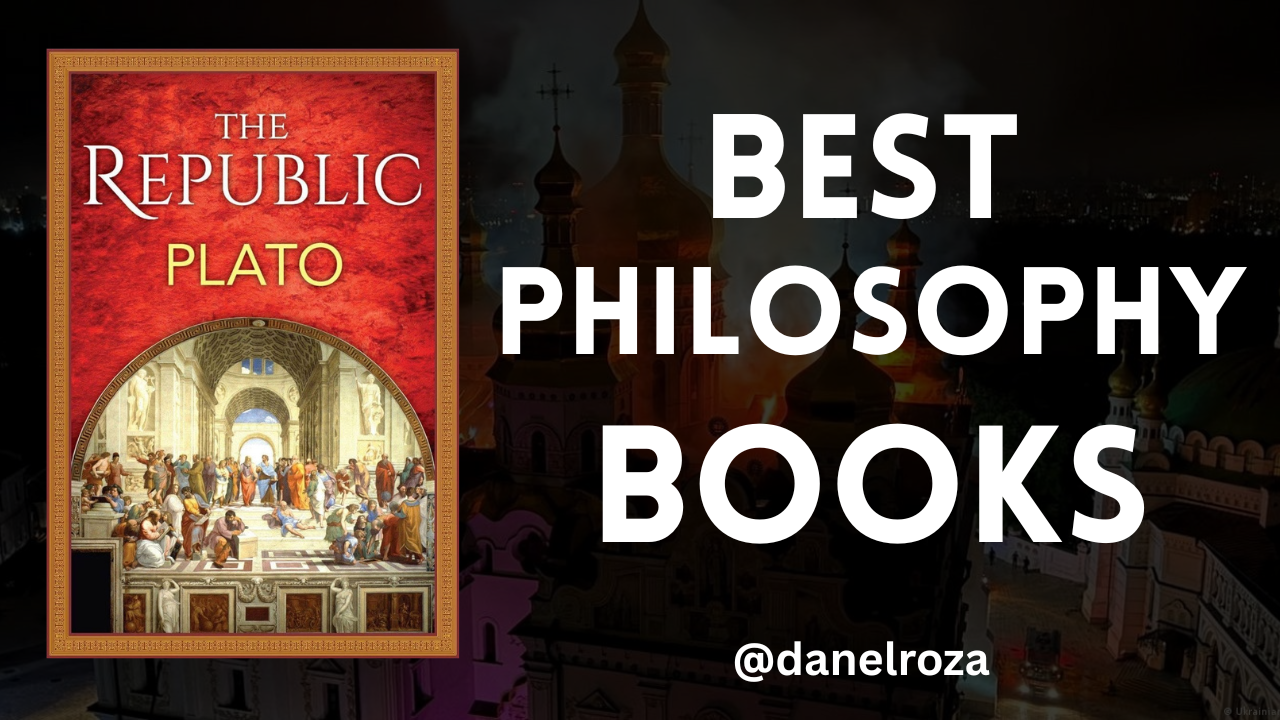
Let me invite you to the best books on philosophy
From the books I have read since I was introduced to philosophy, I would like to invite you to read the best books on prison that I think any thoughtful person should read.
So, in every generation, there are books that have a profound meaning beyond entertainment. These books challenge our habitual thinking, shatter myths, raise uncomfortable questions, and change the way we understand ourselves and the world. These ten books that I invite you to read are not just books to read; they are waves of knowledge that can change the direction of human thought.
If you are a philosopher, student, writer, or simply someone who loves deep thought, these books should have a place on your shelf and in your mind.
1. The Republic — Plato
This book is perhaps the most influential work in the history of philosophy. In the words of Socrates, Plato explores justice, truth, politics, education, and the nature of reality. The Allegory of the Cave, one of the greatest observations of human ignorance and knowledge, is also found in this magnificent book.
If you ask me why we should read this book, I will tell you that every thinking person will eventually ask questions like, What is justice? What is truth? And how do we distinguish reality from fantasy?
2. Meditations — Marcus Aurelius
Written as a personal diary by a Roman emperor, this timeless work offers profound insights into self-discipline, suffering, mortality, and inner freedom.
If you ask me why we should read it, because life will inevitably confront us with difficulties, I will tell you that there are few books that teach us about perseverance and dignity better than this book.
3. Critique of Pure Reason — Immanuel Kant
This is one of the most important and difficult books I have ever read. In this work, Kant examines the limits of human knowledge; he asks what we can truly know about reality.
If you ask why it is important to read, I will tell you that before we can understand the world, we must understand the tools we use to perceive and interpret it.
4. Thus Spoke Zarathustra — Friedrich Nietzsche
This is a work by the German Friedrich Wilhelm Nietzsche (My favorite philosopher of all time), which is part philosophy, part poetry, and part prophecy. In this work, Nietzsche challenges traditional moral values, religious dogmas, and the subjectivity of thought, while simultaneously calling for the creation of new values.
If you ask me why we should read it, I’ll tell you that it forces us to confront the question, “How should we live?” after old certainties (beliefs) have been shattered.
5. The World as Will and Representation — Arthur Schopenhauer
This is a profound exploration of desire, suffering, and the restless nature of existence. Schopenhauer is a brilliant philosopher who has influenced modern philosophy, psychology, and literature.
If you’re wondering why we should read it, I’ll tell you that it’s one of the most profound analyses ever written about why humans suffer.
6. Beyond Good and Evil — Friedrich Nietzsche
In this book, Nietzsche directly attacks conventional moral views and invites readers to examine the inner pressures hidden behind accepted facts.
If you’re wondering why we should read it, I’ll tell you that true thinking begins when we start questioning the ideas that everyone else accepts without question.
7. On the Genealogy of Morality — Friedrich Nietzsche
This is a philosophical investigation into the origins of moral values. Rather than asking whether morality is true or not, Nietzsche’s brilliant work examines where it came from and whose interests it serves.
If you ask me why we should read it, I will tell you that understanding the history of values helps us understand ourselves.
8. Fear and Trembling — Soren Kierkegaard
This is Kierkegaard’s masterpiece about faith, anxiety, individuality, and the difficult choices that define human life.
If you ask me why we should read it, I’ll tell you that it helps us look directly into existence, as some of the most important decisions in life cannot be made based on logic alone.
9. Civilization and Its Discontent — Sigmund Freud
It is a work in which Freud explored the tension between human instincts and the demands of civilization. The observations he made in this book continue to influence debates about culture and psychology today.
If you ask me why we should read it, I will tell you that it is useful because it examines the hidden conflicts between individual interests and the social system.
10. The Structure of Scientific Revolutions — Thomas Kuhn
This is a revolutionary study of how scientific knowledge changes. Kuhn’s major work shows that intellectual progress is often driven not just by the accumulation of facts, but by fundamental paradigm shifts.
If you ask me why we should read it, I will tell you that it teaches us that even our most trusted knowledge systems are shaped by history and are subject to change.
These ten books do not have a single, coherent philosophy. In fact, most of them are deeply contradictory. But when combined, they create a fascinating discussion about reality, knowledge, morality, suffering, freedom, society, and the meaning of life.
If you haven’t read these books, read them not to find final answers, but to learn how to ask better questions. Because philosophy doesn’t begin when we find certainty. It begins when we develop the courage to doubt, to investigate, and to think for ourselves.
Which of these books have you read? How did you find them? Share your thoughts and let’s discuss!!
Join Telegram
👇🏽👇🏽👇🏽
https://t.me/danel_roza
Subscribe to get the latest posts sent to your email.